Who is the CoDesignS ESD Framework For?
"ESD has to be understood as an integral part of quality education, inherent in the concept of lifelong learning: All educational institutions – from preschool to tertiary education and in non-formal and informal education." — UNESCO, 2019
The CoDesignS ESD Toolkit is available to all educational institutions driving formal curriculum, extracurricular activities and lifelong learning activities within community groups.
Open Access License
Available under CC BY-NC-ND-SA 4.0 IGO. By using this publication, users accept to be bound by the CoDesignS terms of use.
http://codesignsesd.org/copyright/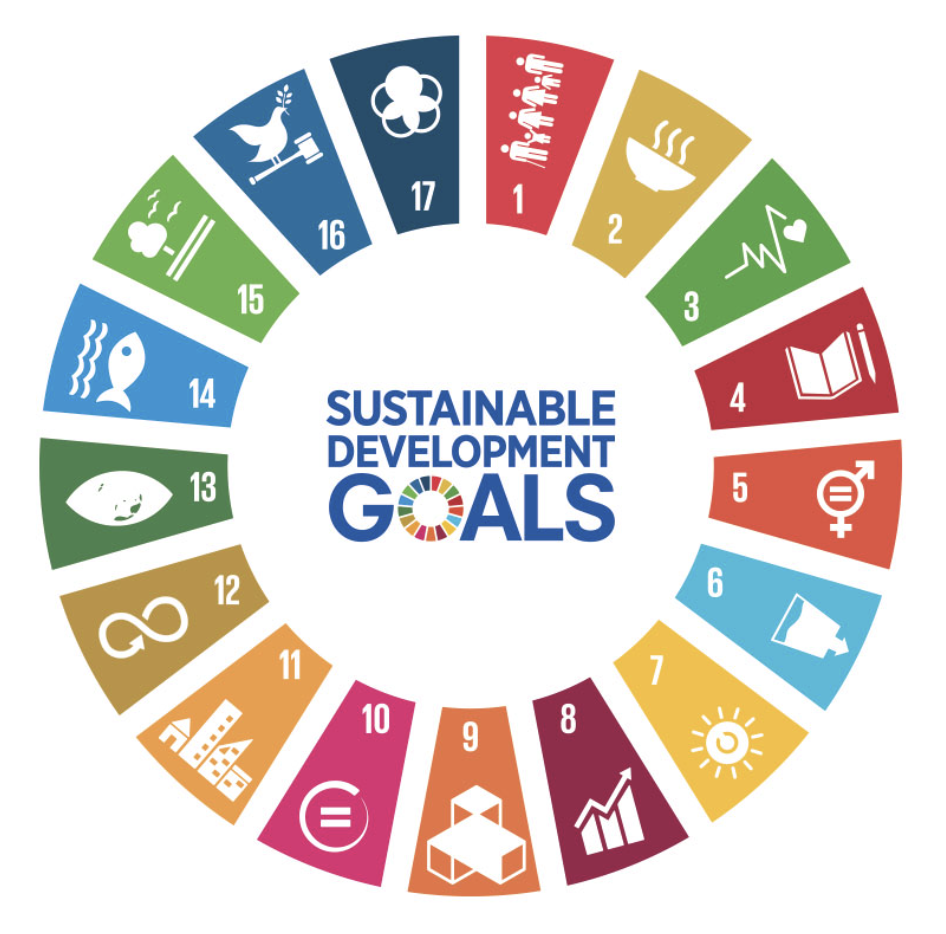
What are the Sustainable Development Goals?
"The 2030 Agenda for Sustainable Development, adopted by all United Nations Member States in 2015, provides a shared blueprint for peace and prosperity for people and the planet, now and into the future."United Nations – The 17 Goals
No Poverty
Zero Hunger
Good Health & Well-Being
Quality Education
Gender Equality
Clean Water & Sanitation
Affordable & Clean Energy
Decent Work & Economic Growth
Industry, Innovation & Infrastructure
Reduced Inequalities
Sustainable Cities & Communities
Responsible Consumption & Production
Climate Action
Life Below Water
Life on Land
Peace, Justice & Strong Institutions
Partnerships for the Goals
Source: UN SDGs
Key Competencies for Sustainability
"There is general agreement that sustainability citizens need to have certain key competencies that allow them to engage constructively and responsibly with today's world. ESD can develop cross-cutting key competencies for sustainability that are relevant to all SDGs."— UNESCO, 2017
Systems Thinking
Recognise and understand relationships; analyse complex systems; think of how systems are embedded within different domains; deal with uncertainty.
Anticipatory (Future Thinking)
Understand and evaluate multiple futures – possible, probable and desirable; create one's own visions for the future; apply the precautionary principle; assess consequences of actions.
Critical Thinking
Question norms, practices, and opinions; reflect on one's own values, perceptions, and actions; take a position in the sustainability discourse.
Strategic
Collectively develop and implement innovative actions that further sustainability at the local level and further afield.
Collaboration
Learn from others; understand and respect the needs, perspectives and actions of others (empathy); deal with conflicts in a group; facilitate collaborative and participatory problem solving.
Integrated Problem-Solving
Apply different problem-solving frameworks to complex sustainability problems and develop viable, inclusive and equitable solution options that promote sustainable development.
Self-Awareness
Reflect on one's own role in the local community and (global) society; continually evaluate and further motivate one's actions; deal with one's feelings and desires.
Normative
Understand and reflect on the norms and values that underlie one's actions; negotiate sustainability values, principles, goals, and targets, in a context of conflicts of interests and trade-offs.
Source: UNESCO's key competencies for sustainability (UNESCO, 2017) – ESD guidelines by QAA and Advance HE (2021)
Specific Learning Objectives for the SDGs
Learning objectives that address SDGs should emphasise an action-oriented and transformative pedagogy. Learning and teaching practices should target the cognitive, socio-emotional and behavioural domains — head, heart and hands — to engage students in a transformative educational experience.
HEAD
Cognitive Domain
Comprises knowledge and thinking skills necessary to better understand the SDG and the challenges in achieving it.
HEART
Socio-Emotional Domain
Includes social skills that enable learners to collaborate, negotiate and communicate to promote the SDGs as well as self-reflection skills, values, attitudes and motivations.
HANDS
Behavioural Domain
Describes action competencies — applying knowledge and empathy into concrete, real-world sustainability actions.
Example – Learning Objectives for SDG 7: Affordable & Clean Energy
🧠 Cognitive
The learner knows about different energy resources – renewable and non-renewable – and their respective advantages, disadvantages, environmental impacts, health issues, and energy security.
❤️ Socio-Emotional
The learner is able to cooperate and collaborate with others to transfer and adapt energy technologies to different contexts and to share energy best practices of their communities.
🤲 Behavioural
The learner is able to apply and evaluate measures to increase energy efficiency and sufficiency in their personal sphere and to increase the share of renewable energy in their local energy mix.
Source: UNESCO, 2017, p17–49. All SDG learning objectives: unesdoc.unesco.org
Learning Descriptors
This step introduces the different learning descriptors used in the CoDesignS ESD cards, based on The Open University Activity Types Framework (OU, 2021) and the UK Professional Standards Framework (UKPSF) from AdvanceHE.
Learning Design Activity Types (OU, 2021)
Assimilative
Attending to information: reading, watching, listening, thinking about, accessing.
Finding & Handling Information
Searching for and processing information: listing, analysing, collating, plotting, finding, gathering.
Communicative
Discussing module content with at least one other person: debating, sharing, reporting, collaborating, presenting.
Productive/Creative
Actively constructing an artefact: creating, building, making, designing, constructing, contributing.
Practice
Applying learning in a real-world or simulated setting: practising, applying, experiencing, exploring, experimenting, simulating.
Assessment
All forms of assessment as a blend of the activity types above: writing, presenting, reporting, demonstrating, critiquing.
UK Professional Standards Framework (UKPSF) – AdvanceHE
The dimensions of the framework are used in the CoDesignS ESD cards. Applying the Toolkit can be used as evidence when applying for UKPSF Fellowship.
Areas of Activity
A1, A2, A3, A4 & A5
Core Knowledge
K1, K2, K3, K4, K5 & K6
Professional Values
V1, V2, V3 & V4
Key Pedagogical Approaches & Teaching Methods
ESD requires an action-oriented, transformative pedagogy which supports collaboration, problem-orientation and inter- and transdisciplinary learning. Different verbs are mapped to the SDG learning objective domains and the OU Activity Types to identify the best pedagogical approach.
| Domain | Low Level (OU Activity Types) | High Level (OU Activity Types) |
|---|---|---|
🧠 Cognitive Domain Knowledge & thinking skills | Verbs: Recognise, retrieve, recall, list, define, differentiate, organise. Method: Self-directed learning: reading, watching, listening, thinking about, accessing. | Verbs: Explain, discuss, interpret, critically appraise, evaluate, demonstrate, summarise, compare, plan, perform. Methods: Participatory Enquiry/Action Research; Action Competence; Object-based Learning; Role Plays; Problem-Based Learning; Team-Based Learning. |
| ❤️ Socio-Emotional Domain Social & self-reflection skills | Not applicable | Digital storytelling, debates, group discussions, critical incidents, collaborative role plays. |
| 🤲 Behavioural Domain Action competencies | Not applicable | Simulations, problem-based learning, community projects, real-world investigations. |
Analysis of the Learning
In this final step, the different learning activity types selected for the delivery of the learning episode are analysed. Review the time assigned to each activity type to ensure a balanced learning experience using the 70:20:10 framework.
Learning Activity Types (OU, 2021)
| Activity Type | Time | % |
|---|---|---|
| Assimilative | — | — |
| Finding & Handling Information | — | — |
| Communicative | — | — |
| Practice | — | — |
| Productive | — | — |
| TOTAL | — | 100% |
The 70:20:10 Framework
Ideally a learning episode should combine all activity types. The majority of learning comes through:
(finding & handling info, practice, productive)
(communicative)
(assimilative)
(OU, 2021; Lewis, 2021; Toro-Troconis et al., 2019; Arets et al., 2016)
Learn about the CoDesignS ESD Toolkit Planner to help you organise and visualise your learning design.
CoDesignS ESD Curriculum Planner →Download the Full Toolkit
Get the complete CoDesignS ESD Toolkit PDF including all 6 steps, case studies and competency cards — free to download in 4 languages.
Licensed under CC BY-NC-ND-SA 4.0 – codesignsesd.org